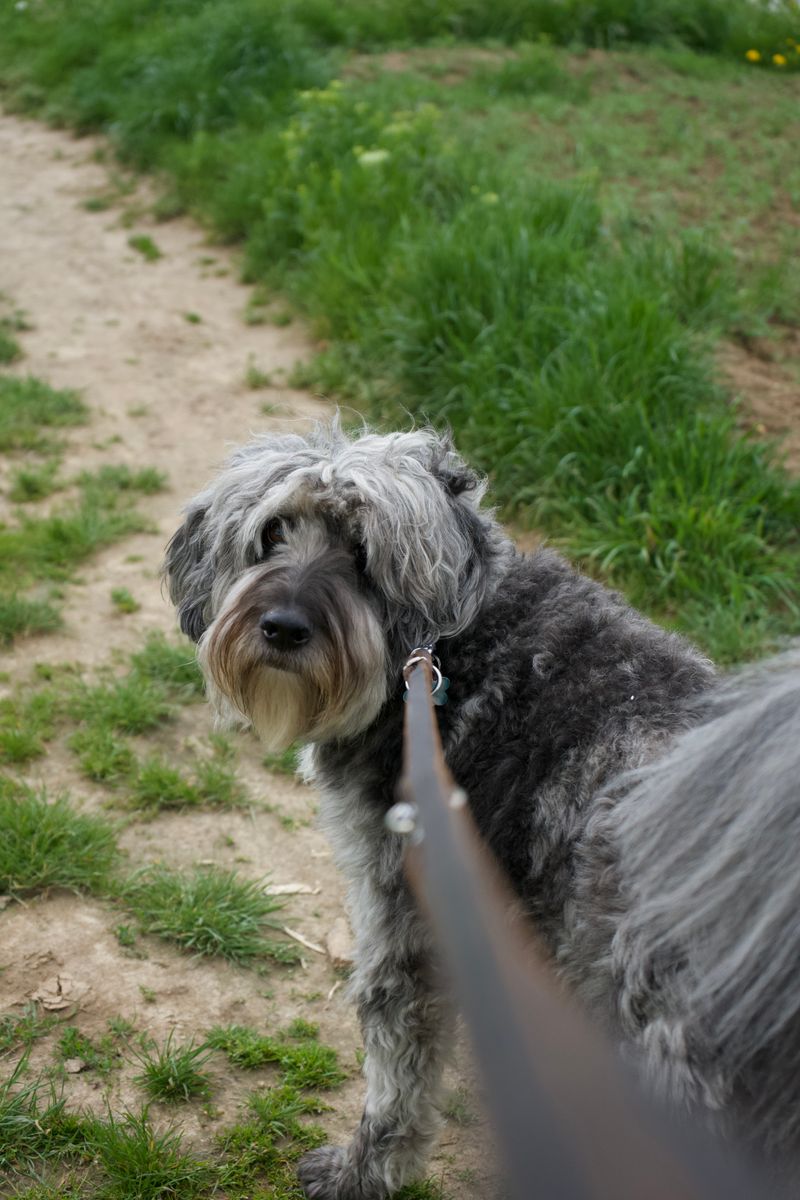
You’re not alone — 75% of dog owners deal with this
Your dog sees another dog on the sidewalk and erupts. Barking, lunging, spinning at the end of the leash. You’re white-knuckling the handle, dragging them across the street, apologizing to everyone in earshot. Walks have become something you dread instead of enjoy.
This is leash reactivity, and it’s the most common behavior problem in dogs. Studies show that 72–75% of dog owners report their dog shows some level of reactivity, and 31% of pet dogs exhibit specifically leash-directed reactive behavior. It’s the number one reason dogs are surrendered to shelters.
The good news: it’s fixable. Not overnight, but with the right understanding and approach, most reactive dogs can learn to walk past their triggers without exploding.
This guide covers everything — what causes it, the science behind why it happens, training methods that work, the mistakes that make it worse, and realistic timelines for improvement.
What is leash reactivity?
Leash reactivity is an overreaction to a trigger — another dog, a person, a bike, a skateboard — that manifests as barking, lunging, growling, or spinning while on leash. It looks aggressive to bystanders, but reactivity and aggression are not the same thing.
Reactivity is a heightened emotional response — fear, frustration, or excitement — that the dog can’t regulate. The outburst is an emotional overflow, not necessarily an intent to harm.
Aggression is intent to cause harm — snarling with a stiff body, fixed stare, snapping, or biting.
The distinction matters because the approach to each is different. Reactive dogs often recover quickly once the trigger is gone. Aggressive dogs may not.
That said, any reactive dog can be pushed into aggression if they’re exposed too intensely, too frequently, or punished for the reactive behavior itself. That’s why understanding the cause matters.
Why is my dog reactive on leash but fine off leash?
This is one of the most common questions owners have, and the answer reveals everything about why leash reactivity happens.
The leash removes your dog’s options.
Off leash, dogs have a natural greeting protocol: approach in an arc, sniff, and disengage. They can also choose to flee if something scares them. The leash eliminates both options — your dog can’t approach naturally and can’t escape. They’re trapped.
When a dog can’t flee and freezing doesn’t make the trigger go away (because you keep walking toward it), the only remaining option is fight — bark, lunge, make it go away.
This is why the problem is often worse on leash, not better. The tool meant to keep your dog safe is actually triggering the reaction.
The two types of leash reactivity
Not all reactive dogs are reacting for the same reason. Understanding which type your dog is changes the approach entirely.
Frustration-based reactivity (the “frustrated greeter”)
Your dog desperately wants to interact with the trigger but can’t. The leash creates barrier frustration. They bark and lunge not because they’re scared, but because they’re frustrated they can’t get there.
Signs:
- Forward body movement, pulling toward the trigger
- Play bows between outbursts
- Wagging tail, bouncy energy
- Often fine (or great) with other dogs off leash
- May redirect frustration onto the leash itself
These dogs don’t want the trigger to go away — they want to get closer. The leash is the problem, not the other dog.
Fear-based reactivity
Your dog perceives the trigger as a threat and wants it to go away. The barking and lunging are distance-increasing behaviors — a dog’s way of screaming “stay back.”
Signs:
- Stiff body, ears pinned back
- Whale eye (showing the whites of their eyes)
- Tucked tail between outbursts
- May try to retreat before the outburst starts
- Often worse with triggers that approach directly or make eye contact
These dogs aren’t trying to get closer — they’re trying to create space.
Why the distinction matters
A frustrated greeter who’s forced to keep distance may become more frustrated. A fear-reactive dog who’s forced closer to a trigger will become more afraid. The wrong training approach makes things worse, not better.
What causes leash reactivity?
Lack of socialization during the critical window
The most common root cause. Puppies have a critical socialization period between 3 and 14 weeks where they learn what’s normal and safe. Dogs that didn’t get quality exposure to other dogs, people, sounds, and environments during this window are more likely to react with fear or overarousal later.
This is why so many pandemic puppies became reactive — lockdowns meant limited socialization during the most important developmental period.
Learned behavior
Here’s the thing about reactivity: it works.
Your dog barks at another dog. The other dog’s owner crosses the street. The scary thing goes away. Your dog just learned that barking makes threats disappear. Every single time this happens, the behavior gets stronger.
This is called negative reinforcement — the removal of something unpleasant (the trigger) strengthens the behavior (barking). Your dog isn’t being stubborn. They’re doing exactly what worked last time.
Past negative experiences
A single bad encounter can create lasting reactivity. A dog attack, a painful correction in the presence of another dog, or even a scary sound that coincided with seeing a trigger can create a negative association that persists.
Breed predispositions
Some breeds are more prone to reactive behavior — but genetics is not destiny:
- Herding breeds (Border Collies, Aussies, German Shepherds) are sensitive to movement
- Guarding breeds (Rottweilers, Dobermans) have protective instincts that can manifest as reactivity
- Terriers have high prey drive and persistence
Any breed can be reactive, and any breed can learn to be calm. Individual variation within breeds exceeds breed averages.
Owner tension on the leash
This one is uncomfortable to hear, but it’s real. When you see a trigger approaching and tighten the leash, your dog feels that tension. Your body language changes — you stiffen, your breathing changes, you grip the leash harder.
Your dog reads all of it. That tension signals danger. You’re inadvertently confirming that the trigger is something to worry about.
The science: what’s happening in your dog’s brain
Understanding the neuroscience behind reactivity makes the training approach intuitive.
Threshold
Every dog has a threshold — the distance at which they can notice a trigger without reacting.
- Below threshold: dog can think, learn, take treats, respond to cues
- Over threshold: pure fight-or-flight — dog cannot learn anything
All effective training happens below threshold. If your dog is already barking and lunging, the training window has closed.
Trigger stacking
This is why your dog seems “fine” some days and “loses it” other days.
Every stressful event raises cortisol. A squirrel. A loud truck. A dog behind a fence. Each one stacks. By the third or fourth trigger, even a mild one pushes them over.
What looks unpredictable was actually accumulated stress.
The cortisol window
Cortisol peaks within 15–30 minutes of a stressful event. It takes 24 to 72 hours to return to baseline.
A reactive episode on Monday morning means lower threshold Monday afternoon, Tuesday, and Wednesday. Daily episodes prevent cortisol from ever fully resetting — creating a chronic stress state.
This is why management matters. Every reactive episode sets progress back by days.
Why punishment often makes it worse
Punishing the reactive response (leash corrections, yelling, shock at the wrong moment) adds more stress in the presence of the trigger.
The dog’s new association: trigger appears → I feel pain.
The barking may stop — but the fear or frustration deepens. Many dogs that have their warning signs suppressed escalate directly to biting without any preceding growl.
You can’t punish a cortisol curve.
Training methods that actually work
Counter-conditioning and desensitization (the foundation)
This is the gold standard, used in virtually every effective approach to reactivity.
Desensitization: Gradual exposure to the trigger starting at distances where the dog is below threshold — they notice it but don’t react.
Counter-conditioning: Pairing the trigger’s presence with something the dog loves (usually high-value treats). The goal is to change the dog’s emotional response from “that’s scary” to “that predicts good things.”
Over many repetitions, the dog’s automatic emotional reaction to the trigger shifts. This isn’t obedience — you’re not teaching the dog what to do. You’re changing how they feel.
The engage-disengage game
The most widely recommended protocol for leash reactivity:
Level 1 (Engage): Dog notices trigger → you mark (“yes”) → treat. That’s it. The dog doesn’t have to do anything except notice the trigger. Classical conditioning — the trigger predicts treats.
Level 2 (Disengage): Dog notices trigger → dog voluntarily looks away from trigger → you mark → treat. Now the dog is actively choosing to disengage. Self-interruption is the goal.
Rules:
- Must stay below threshold. If the dog reacts, you’re too close.
- 3–5 successful reps at the same distance before decreasing distance.
- End on a win. Don’t push until it falls apart.
Pattern games
Developed by Leslie McDevitt (Control Unleashed), pattern games give your dog a predictable “script” to follow in the presence of triggers.
The 1-2-3 Game: Count rhythmically — “one… two… three” — and deliver a treat on “three.” The predictable rhythm itself is calming. The dog learns to expect what’s coming, which reduces anxiety.
Why it works: Reactive dogs are constantly bracing for the unexpected. Predictability is the opposite of anxiety. When a dog has a pattern to follow, they have something to focus on other than the trigger.
How balanced training approaches reactivity
At K9 Academy, we use a structured progression:
Phase 1 — Foundation (positive reinforcement): Build solid obedience using food, markers, and praise. Sit, down, heel, place, recall. The dog needs to understand what’s being asked before any tools are introduced. This phase is non-negotiable.
Phase 2 — Counter-conditioning and desensitization: Change the emotional response to triggers using the methods above. This is identical to what any good trainer does regardless of methodology.
Phase 3 — Tool introduction (after foundation is solid): A prong collar provides clear, consistent mechanical feedback. An e-collar provides remote communication at distance. These tools are layered on after the dog already knows the commands and has had emotional conditioning work.
Phase 4 — Proactive interruption: Once the dog knows the commands AND has had their emotional response shifted through counter-conditioning, low-level e-collar stimulation can interrupt fixation before it spirals into a full reactive episode. The e-collar acts as a “tap on the shoulder” that redirects the dog back to the handler.
The key distinction: We don’t correct the emotion. We change the emotion through counter-conditioning first, then add clarity through tools. A dog that’s been properly counter-conditioned isn’t being punished for being scared — they’re being redirected back to a behavior they already know and have been rewarded for thousands of times.
This is why it works faster than purely positive methods for many dogs — not because of the correction itself, but because the combination of emotional change plus clear communication gives the dog a complete picture.
The 10 mistakes that make reactivity worse
- Tightening the leash when you see a trigger — your tension travels down the leash and confirms the trigger is dangerous
- Avoiding walks entirely — your dog never builds capacity to handle triggers and may develop other behavioral issues from under-stimulation
- Flooding — forcing your dog into close proximity with triggers hoping they’ll “get used to it.” This makes phobias and reactivity dramatically worse
- Punishing growling or barking — removes the warning signs without changing the emotion. Dog may escalate directly to biting
- Using retractable leashes — zero control, dog gets too far ahead, can’t manage distance to triggers
- Reacting too late — by the time you notice the trigger, your dog already has. You need to be scanning constantly and managing distance proactively
- Inconsistency — training once a week isn’t enough. Daily practice, even 10 minutes, is essential
- Expecting a quick fix — reactivity takes months, not days. Setting unrealistic expectations leads to frustration and giving up
- Only managing, never training — avoiding all triggers prevents your dog from ever learning to cope. Management buys time; training creates change
- “Socializing” a reactive dog at the dog park — this is flooding, not socialization. Taking a reactive dog to a chaotic off-leash environment is the fastest way to make it worse
How long does it take to fix leash reactivity?
Here’s an honest timeline:
Weeks 1–4: Management systems in place. Fewer reactive episodes through distance control, route planning, and avoiding trigger stacking. You’re not “fixing” anything yet — you’re stopping the rehearsal of reactive behavior and letting cortisol return to baseline.
Weeks 4–8: Counter-conditioning starts showing results. Dog begins offering alternative behaviors (looking at you instead of fixating on triggers). Threshold distance starts decreasing.
Months 2–6: Noticeable improvement. Intensity, frequency, and duration of reactive episodes decrease significantly. You can walk past some triggers without a reaction.
Months 6–12+: Significant behavioral change for most dogs. Many triggers no longer produce reactions. Dog enters “maintenance mode.”
With balanced training tools: Most dogs show noticeable improvement in 2–3 weeks once tools are introduced (after the foundation and counter-conditioning phases). Significant change typically happens in 8–12 weeks of consistent work.
Can leash reactivity be cured?
Honestly? Leash reactivity is not a disease, so “cure” isn’t quite the right word. The goal is reducing the intensity, frequency, and duration of reactive episodes until your dog can walk past triggers without exploding.
Some dogs reach a point where you’d never know they were reactive. Others will always need some level of management on walks. Both outcomes are wins.
What “fixed” looks like in practice: your dog notices a trigger, checks in with you instead of reacting, and continues walking. They still see the other dog — they just don’t care anymore.
When does your dog need professional help?
Get a trainer involved if:
- You’ve been working consistently for 4+ weeks with no improvement
- The behavior is intense, unpredictable, or escalating in severity
- Your dog has made contact (bitten) or attempted to bite
- You feel unsafe handling your dog during episodes
- There’s resource guarding, territorial aggression, or redirected aggression alongside the reactivity
- Your dog’s quality of life is severely impacted — they can’t go for walks without extreme stress
Don’t wait until it’s an emergency. Reactivity is easier to address early. The longer the behavior is rehearsed, the more deeply ingrained it becomes.
Is my dog reactive or aggressive?
This is the question that keeps owners up at night. Here’s how to tell:
| Reactive | Aggressive | |
|---|---|---|
| Intent | Emotional overflow (fear/frustration) | Intent to cause harm |
| Body language | May show play signals between outbursts | Stiff, hard stare, forward weight |
| Recovery | Recovers quickly once trigger is gone | May not de-escalate easily |
| Tail | Often still wagging (frustration) or tucked (fear) | Stiff, high, flagging |
| Trigger | Predictable (other dogs, bikes, etc.) | May seem unpredictable |
| Contact | Rarely makes contact | May snap, bite, or hold |
If you’re unsure, err on the side of caution and consult a professional. It’s not a distinction you want to get wrong.
What breeds are most reactive?
There’s no definitive breed-reactivity ranking — individual variation within breeds exceeds breed averages. But certain breed groups have tendencies that can manifest as reactivity:
- Herding breeds (Border Collies, Australian Shepherds, German Shepherds) — highly sensitive to movement and environmental changes
- Guarding breeds (Rottweilers, Dobermans, Mastiffs) — protective instincts that can present as reactivity to strangers or unfamiliar dogs
- Terriers (Jack Russells, Bull Terriers, Staffies) — high prey drive and persistence
- Bully breeds — often misread by other dogs due to body structure, leading to tense interactions
- Rescue dogs — regardless of breed, unknown socialization history increases risk
Any breed can be reactive. Any breed can learn to be calm. Breed is a factor, not a fate.
Should I use a prong collar for a reactive dog?
A prong collar can be an effective tool for reactive dogs — but timing matters.
When it helps: After foundational obedience is solid and counter-conditioning has begun. The prong provides consistent mechanical feedback that helps large or strong dogs stay below threshold. Many dogs respond to the clarity it provides.
When it hurts: If introduced too early (before the dog understands what’s expected) or used to punish the reactive response. For a small percentage of dogs, the prong correction coinciding with the trigger’s appearance strengthens the negative association — “other dog appears → I feel discomfort.”
A prong collar is a communication tool, not a punishment tool. The timing, context, and foundation work before its introduction determine whether it helps or hinders.
Do e-collars help with reactivity?
When introduced correctly — yes, for many dogs.
The e-collar at low working levels (not punitive levels) serves as a “tap on the shoulder” that interrupts fixation before it spirals. Combined with solid obedience and counter-conditioning, it gives handlers a way to redirect their dog’s attention at the exact moment it matters — even at distance.
The e-collar should NEVER be:
- The first tool introduced
- Used before the dog has solid obedience on leash
- Used at high levels as punishment for reacting
- Used without professional guidance
In our Level 2 program, e-collar training is introduced after 6 weeks of foundational work — and only after the dog understands the commands being asked.

What should I do right now?
If your dog is reactive, start here:
- Identify the type — is your dog a frustrated greeter or fear-reactive? The approach differs.
- Manage first — choose quieter routes, walk at off-peak times, increase distance from triggers. Stop rehearsing the reactive behavior.
- Start the engage-disengage game — below threshold, every day, even for 10 minutes.
- Stop punishing the outburst — it makes the underlying emotion worse.
- Get professional help if you’re stuck — reactivity is the one problem where professional guidance makes the biggest difference.
Free resource: The Reactive Dog Bundle
We put together a comprehensive resource for reactive dog owners — training protocols, exercises you can start today, and a clear roadmap from reactive to reliable.
Download the Reactive Dog Bundle — it’s the same framework we use with our clients.
K9 Academy’s group obedience classes are designed for dogs of all behavior levels — including reactive dogs. The group setting provides the controlled exposure to real-world distractions that reactive dogs need, with professional management of spacing and intensity. Our Level 1 program addresses mild reactivity, and our private training handles severe cases. Call us at 437-778-5273 or join the waitlist.
Related reading: Leash Reactivity in Toronto — Why It’s an Epidemic | How to Fix Leash Reactivity — A Trainer’s Guide