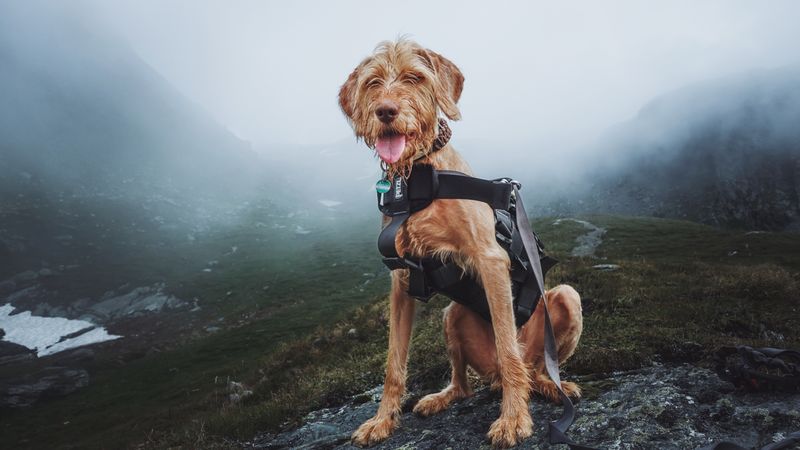
Why every dog owner should be hiking
A walk around the block exercises your dog’s legs. A hike exercises their brain.
New smells, uneven terrain, wildlife sounds, other dogs on the trail — hiking gives your dog the mental stimulation and real-world exposure that neighbourhood walks can’t. It builds confidence, burns energy more effectively, and strengthens the bond between you and your dog.
But there’s a catch: a dog without the right training on a trail is a liability — to themselves, to wildlife, and to other hikers. This guide covers the best trails, the training your dog needs, the hazards to watch for, and everything you should bring.
Best dog-friendly trails in the GTA
Toronto
High Park — 4 km loop through 398 acres. Easy difficulty. Has a designated off-leash area. Great for city dogs and first-time trail walks.
Scarborough Bluffs — 6.8 km along Lake Ontario’s dramatic cliff edge. On-leash only. Moderate difficulty with elevation changes. Stunning views.
Don Valley Trail System — Extensive ravine trails running through the city. On-leash. Easy to moderate. Accessible from Leaside, East York, and Don Mills.
Toronto Islands — 14 km out-and-back. On-leash. Flat and easy. Ferry access required. A completely different feel from the city — feels like a day trip.
Near Stouffville & Gormley (our backyard)
These trails are closest to our Stouffville facility:
York Regional Forest — Davis Drive Tract — Off-leash permitted. Entrances at 4277 Davis Drive and 17242 McCowan Road, Whitchurch-Stouffville. Free, open year-round. One of the few truly off-leash hiking options in the GTA.
York Regional Forest — Bendor & Graves Tract — Off-leash permitted. Entrances at 18038 McCowan Road and 17689 Kennedy Road, East Gwillimbury. Free, open year-round.
Bill Fisch Forest Centre Trail — 5.8 km loop near Stouffville. Boardwalks across wetlands, shaded forest paths. On-leash. Easy to moderate.
Eldred King Woodlands — 18 km of trails near Ballantrae, just north of Stouffville. Spectacular in fall. On-leash. Easy to moderate.
Hollidge Tract — Loop through mixed forest and wetland. On-leash. Easy. A good starter trail.
Newmarket & Aurora
Fairy Lake Park — Easy loop around Fairy Lake in Newmarket. Waterfront views, shaded areas. On-leash. Perfect for relaxed outings.
Nokiidaa Trail — Multi-use trail connecting Newmarket and Aurora along the East Holland River. Flat and easy.
Scarborough
Rouge National Urban Park — Canada’s first national urban park. Free admission, open 365 days a year. Dogs on-leash (2 m max). Trails range from easy meadow walks to more challenging wetland routes. Dogs are NOT permitted on Rouge Beach or in sensitive ecological zones.
Mississauga
Rattray Marsh Conservation Area — Five trails along the Lake Ontario shoreline. Easy to moderate. On-leash. Great for nature walks with bird watching.
Culham Trail — 12 km along the Credit River starting from Erindale Park. Scenic river views. On-leash.
Caledon (about 1 hour north)
Forks of the Credit Provincial Park — Rolling meadow trails, Cataract Falls waterfall, Niagara Escarpment views. On-leash. Moderate difficulty. Day-use only.
Cheltenham Badlands — Short trails with surreal red clay landscapes. On-leash. Reservation required (Ontario Heritage Trust website). Open May to mid-November.
Hamilton (about 1 hour southwest)
Dundas Valley Trail System — 40 km of trails on the Niagara Escarpment, connected to the Bruce Trail. On-leash. Moderate to challenging.
Durham Region
Glen Major Forest & Walker Woods — 47 km of trails on the Oak Ridges Moraine. Meadows and mixed forests over varied terrain. On-leash. Paid parking.
Off-leash rules: know before you go
| Where | Rule | Max leash | Fine |
|---|---|---|---|
| Ontario Provincial Parks | On-leash (except designated areas) | 2 metres | $95–$125 |
| City of Toronto | On-leash (except designated areas) | City bylaw | Up to $615 |
| TRCA Conservation Areas | On-leash always | 2 metres | Municipal fines |
| Parks Canada (Rouge) | On-leash always | 2 metres | Federal fines |
| York Regional Forest | On-leash (except Davis Drive & Bendor/Graves tracts) | 2 metres | Regional fines |
The reality: very few trails in Ontario allow off-leash hiking. The Davis Drive and Bendor & Graves tracts in York Regional Forest are rare exceptions. Everywhere else, your dog needs to be leashed — and the fines are real.
This is why off-leash recall training matters. Even on-leash, a dropped leash or a broken clip happens. Your dog needs to come back when called, every time. And if you want to enjoy the off-leash tracts, your dog needs to be genuinely reliable — not just “pretty good.”
Training your dog needs before trail hiking
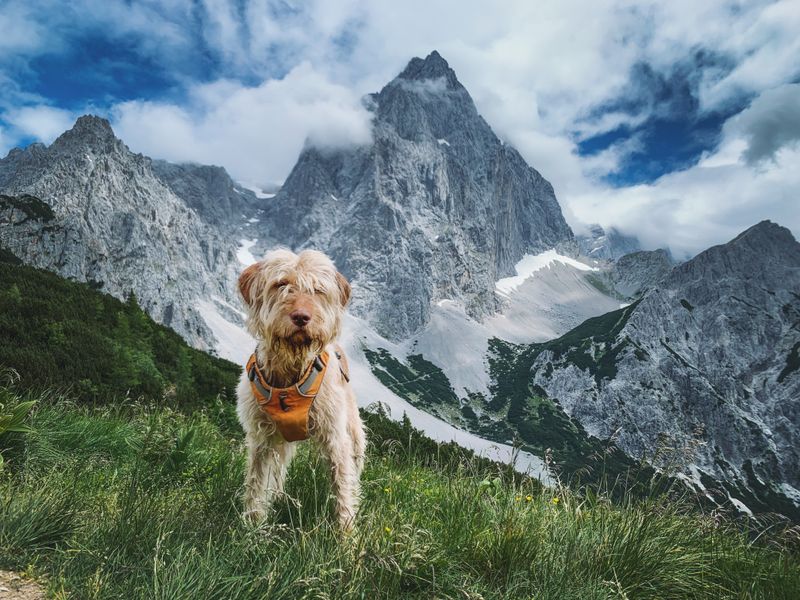
You don’t need a perfectly trained dog to start hiking. But you do need these fundamentals:
1. Recall — the non-negotiable
Your dog should respond to recall 95%+ of the time with significant distractions before you consider off-leash hiking in permitted areas. On-leash, recall still matters — leashes break, clips fail, and you need your dog to come back.
Practice with a long line (20–30 feet) before graduating to off-leash in a permitted area.
2. Leash manners
A dog that pulls on a trail is exhausting for you and dangerous for both of you — especially on narrow paths near drop-offs or when passing other hikers. Your dog should walk on a loose leash consistently before hitting trails with any elevation or technical terrain.
3. Sit-stay
Essential for yielding to other hikers on narrow trails, pausing at intersections, and managing encounters with other dogs or wildlife. Pull over, put your dog in a sit-stay, let others pass.
4. Leave it
Trails are full of things your dog shouldn’t eat — wildlife scat, toxic plants, dead animals, unknown berries. A solid “leave it” command prevents emergencies.
5. Trail etiquette
This isn’t a command — it’s your responsibility:
- Pull over and control your dog when other hikers pass
- Always yield to uphill hikers
- Not every person on the trail likes dogs — keep your dog close when passing
- Pick up and pack out all waste (no leaving bags on the trail)
- Never let your dog approach other dogs without permission
Start small
Begin with short, easy trails and build up. Don’t take a dog that’s never left the neighbourhood on a 15 km escarpment hike. Expose your dog gradually to trail-specific challenges: other hikers, mountain bikers, wildlife sounds, uneven terrain.
Trail hazards every Ontario dog owner should know
Ticks
Every trail in Ontario is tick territory. Blacklegged ticks carry Lyme disease, and all of York Region and the GTA are now classified as estimated risk areas. Do a thorough tick check after every hike — ears, armpits, between toes, around the tail. Make sure your dog is on year-round tick prevention medication.
We wrote a complete guide to ticks and Lyme disease in Ontario — read it before your first hike of the season.
Porcupines
Active at dusk and dawn in wooded areas. If your dog gets quilled, go to a vet immediately. Do not attempt removal at home — dogs need sedation for safe removal, and quills have barbs that migrate deeper into the body.
Prevention: keep dogs leashed, especially in wooded areas at dawn and dusk.
Coyotes
Increasingly common in the GTA. Most active at dusk and dawn. If you encounter one: stay calm, don’t run, make yourself large, speak firmly, and back away slowly. Keep your dog leashed and don’t let them investigate coyote scat (risk of dangerous tapeworm).
Toxic plants
Giant hogweed and wild parsnip are both invasive species found on Ontario trails. Their sap causes severe burns when exposed to sunlight — and can blind dogs. Both are tall plants with umbrella-like flower clusters. Learn to identify them and steer clear.
Blue-green algae
If you’re hiking near lakes or ponds in summer, keep your dog out of water that looks like it has scum, foam, or green paint on the surface. Blue-green algae can kill a dog within hours. There is no antidote.
Heat
Summer hiking requires extra caution. Avoid 11 AM – 3 PM on hot days, bring significantly more water than usual, and watch for signs of overheating. Read our complete heat safety guide before summer hiking.

What to bring: the full gear checklist
Essentials (every hike)
- Sturdy leash and harness (bring a backup leash)
- Collapsible water bowl + extra water
- Poop bags (bring more than you think you need)
- High-value treats (for recall reinforcement on trail)
- Dog ID tags and microchip info current
- Recent photo of your dog on your phone
Tick prevention kit
- Tick removal tool or fine-tipped tweezers
- Lint roller (helps find ticks in fur post-hike)
- Ensure your dog is on vet-recommended prevention medication
First aid kit
- Sterile gauze pads and self-adhering bandages
- Saline solution (wound/eye flushing)
- Blunt-end scissors and tweezers
- Styptic powder (stops bleeding from cut nails/pads)
- Emergency bootie (fits over bandaged paw)
Seasonal additions
- Summer: Cooling vest or bandana, extra water, dog-safe sunscreen for light-skinned dogs
- Fall (hunting season): Blaze orange vest or bandana for your dog AND yourself — this is critical
- Winter: Booties or paw wax, dog jacket for short-coated breeds, headlamp for early darkness
Seasonal hiking guide
Spring (March–May)
Tick season begins as soon as temperatures hit 4°C consistently. Trails can be very muddy, especially on the Oak Ridges Moraine. Watch for emerging toxic plants. Spring wildflowers at Bronte Creek make the mud worth it.
Summer (June–August)
Heat is the primary danger. Hike early morning or evening. Bring extra water. Test rock and pavement surfaces before letting your dog walk on them. Watch for blue-green algae in lakes and ponds.
Fall (September–November)
The best hiking season — cooler temps, spectacular foliage, and tired dogs. But hunting season means you need blaze orange. Wear it yourself and put it on your dog. Avoid trails at dawn and dusk. Make noise while hiking. Tick season continues until first hard frost.
Winter (December–March)
Wipe paws after every hike to remove salt and de-icer residue. Booties or paw wax prevent painful ice balls between toes. Keep dogs away from frozen ponds and rivers — ice thickness is unpredictable. Shorter daylight means headlamps are essential.
Dog-friendly camping near Toronto
Want to extend the hike into an overnight?
- Rouge National Urban Park — Glen Rouge Campground — 7450 Kingston Road, Scarborough. The closest campground to downtown Toronto.
- Bronte Creek Provincial Park — 45 min west. Two off-leash areas.
- Bon Echo Provincial Park — 3 hours east. Has a 1.4 km off-leash Pet Exercise Trail.
- Killbear Provincial Park — 3 hours north. Two dog beaches plus an off-leash area.
All Ontario Provincial Parks welcome dogs on campsites and most trails. Leash max 2 metres at all times unless in a designated off-leash area. Some campground loops are pet-free — check ontarioparks.ca before booking.
The bottom line
Hiking with your dog is one of the best things you can do together. It burns energy, builds confidence, and gives your dog the kind of mental stimulation that no amount of neighbourhood walks can match.
But it starts with training. A dog with reliable recall, solid leash manners, and a strong “leave it” is a dog you can take anywhere. A dog without those skills is a liability on the trail — to themselves, to wildlife, and to other people.
If you’re not there yet, that’s what we’re here for.
K9 Academy’s group obedience classes teach the exact skills you need for safe off-leash hiking — recall, leash manners, impulse control, and obedience under real-world distraction. Our Level 2 program ends with an off-leash graduation hike where your dog proves it on a real trail. Join the waitlist or call 437-778-5273.